I dropped it to 70amps (in the above post), in case it is the unit, why waste electrodes. And ceriated is fine as well.Originally Posted by Wrenchtamer

I edited the post and you posted within a minute or two of my first post before the edit.


 Everlast Support Team


I dropped it to 70amps (in the above post), in case it is the unit, why waste electrodes. And ceriated is fine as well.
I edited the post and you posted within a minute or two of my first post before the edit.
Mike R.
Email: admineverlast@everlastwelders.com
www.everlastgenerators.com
www.everlastwelders.com
877-755-9353 x203
M-F 12 - 7PM PST
FYI: PP50, PP80, IMIG-200, IMIG-250P, 210EXT and 255EXT.
 Member
here they are. the first torch shot was 90 amps, balance as requested, just a hair over one second run time, the second shot was about three seconds and the tungsten threatened to drop into the work. I used a brand new one. not the same as yesterday. crap sorry I had already run the experiment at 90 amps. I can do so again at 70 if need be.
Last edited by Wrenchtamer; 12-09-2010 at 12:39 PM.
Everlast Support Team
That was with the trigger, not the pedal? Also, from the AC Freq to 10 o'clock for me too.
Can you email me your phone number (support@everlastwelders.com). By phone later today would be a lot faster to figure out what is going on. The weld looks better, but it is way too hot.
Mike R.
Email: admineverlast@everlastwelders.com
www.everlastgenerators.com
www.everlastwelders.com
877-755-9353 x203
M-F 12 - 7PM PST
FYI: PP50, PP80, IMIG-200, IMIG-250P, 210EXT and 255EXT.
New Member
Not trying to be rude, are you sure the aluminum you are working with is a weld-able type? Not all aluminum is weld-able.
Jay
 Everlast Sales and Support Team
Wrenchtamer,
You have your torch in the negative hole right? Try turning it all the way positive and see if you get different results.
Mark
performance@everlastwelders.com
www.everlastgenerators.com
www.everlastwelders.com
877-755-9353 x204
M-F 9am - 5pm EST
Member
yeah sorry you cant tell in the photo but the torch is hooked up correctly. I assume you mean adjust the balance all the way positive? I will if you want but in my previous post the two colums from (left nad right) are 10% and 90% respectively, results visible. When I stepped up to the 5/32 tungsten I could weld at low amps without melting the tungsten but I could never go above 50. when I did, though, I can't tell a difference in the width of the CE but I can tell a difference in the way the filler lays down. 10% gie a narrow, tall bead and 90% a much flatter, wider bead. my lack of skill at running filler would have only added a new dimension of complexity to this problem so I wasnt going to mention it but i have a pic I can post if you would like. The bead looks reasonable although you have to remember it was a monstrous electrode at very low amperage. I have had some experience at tig welding but not aluminum so I didnt know you weren't supposed to have to do that at first. when I first got the machine I had a guy who works at the savannah nuclear site come check it out because he was interested in purchasing one. He was convinced that something was wrong there but I attributed it to the fact that he was used to a miller with continuous high frequency. Plus, some guys ee anything but blue and scoff right away so I felt I couldn fully trust his judgement. I had tried to address it in forums but I probably wasnt persistent enough because I dont have too mch time back then. I'm still happy with the machine, all other functions perform perfectly. I feel good Im sure we will get this sorted out. I'm just glad were finally on the right track.
Last edited by Wrenchtamer; 12-09-2010 at 03:47 PM.
Everlast Sales and Support Team
I am over in Central S. GA. I'd be glad to take a look at it if you get this way.
Mark
performance@everlastwelders.com
www.everlastgenerators.com
www.everlastwelders.com
877-755-9353 x204
M-F 9am - 5pm EST
 Senior Member
Jay - "nonweldable" aluminum should still melt into a puddle just like other aluminum, so I doubt its wrenchtamer's problem. Nonweldable AL just has higher tendencies toward forming cracks on or after weld puddle solidification, aka "hot cracks".
Wrenchtamer - Gets pics and info. I agree that the results seem odd, if your machine were working properly and giving you the AC balance shown on the knob (speaking about the results you got on your first pictures, with the left column, at 10% balance). I do recall when I was overheating my torch/cable, I had contaminated tungsten and work, including blue/purple tipped tungstens after really hot welds. The sides of the tungsten, extending back up towards the collet would also become "textured" from the contaminated gas. Should never have colored tungsten if you have enough post flow, and hold your torch still during cool down. (Keeping the tungsten shielded until it stops glowing completely should be about OK.)
I would if you could, venture down yonder, past the Okefenokee swap (watch out for 'gators...) and give Mark a visit. I'm sure he'll be able to get to the bottom of this.
I wonder if your machine isn't getting the full 90% EN balance advertised. If some 250EX units had a problem with it, maybe some PP256 could also.
If you'd like, I can also repeat one of your experiments on aluminum with my Super200P and post the results up, for comparison. Tell me what experiment of yours you want me to try out on my machine. The range on my balance knob is 20%-80% and my AC frequency is fixed 60Hz.
Last edited by jakeru; 12-10-2010 at 06:55 PM.
Member
just to give everyone the update. I had a very pleasant experience on the phone with mike last night and I will be taking the machine to mark tomorrow after I leave work. I just want to say how impressed I was with mike and the way he handled this situation. he was very easy and pleasant to communicate with and I felt like he understood that I was taking every measure to try and rule out operator error. I deal with tech support people from a lot of different companies from scan tool manufacturers, scopes, refrigerant handlers, and on and on. He went step by step with me over the phone to try and troubleshoot the machine. That phone call and the way everlast is handling this situation has made a customer for the forseeable future out of me. I know this will get worked out, operator error or not. The only real way to rule out operator error is in the hands of a more skilled operator.
Senior Member
Glad to hear you are making some progress with the diagnosis. Keep us posted on what you find! Hope you can figure this out and get to welding some aluminum.
Member
Well my machine is fixed. There was a three wire plug on top of the main board that was backed slightly out of it's socket, presumably during shipping. I dont know it's specific function, but the result of it being off was that it was reverting to dc positive when the ac switch depressed. It is performing beautifully now and doing everything it is purported to. But that is not really the subject of this post. What I want to make known is how impressed I am with mark and mike and how everlast handled this situation. mark treated me like a long time friend, not like an annoyance which has been myexperience with most tech support companies. He had my machine repaired within the first half hour of my arrival. I was there for six hours. So the astute observer will notice that I was there for five and a half hours doing something besides fixing my welder. He spent five hours more than what was necessary to satisfy the requirements of his job. Helping my perfect my technique, giving me a guided tour of the (badass) everlast 2011 line. opening machines. Demonstrating the obvious improvements in quality over the already strong units. Explaining stuff. Answering questions about tig welding and anything else I wanted to know. As stated, he treated melike a friend and, I venture to say I have made a friend. So, in my mind, there will never be any question of whether or to what extent everlast cares about it's customers post purchase. We had a candid conversation about everlast, it's competition, and the state of the welding industry in general Mark is a kind, endearing man who believes in his work, the company he works for, and the products they sell. Out of this consumer he has made a customer for life.
If anyone is wondering, My official heterosexual man crush list has been updated. Mark now rests comfortably between the ranks of Spike Slawson and Marvin Heemeyer.
PS If you dont know who Marvin Heemeyer is, you should.
Everlast Support Team
Brian,
Glad you are up and running and all is good. Like I said, it might be the machine.Sometime it is.
Mike R.
Email: admineverlast@everlastwelders.com
www.everlastgenerators.com
www.everlastwelders.com
877-755-9353 x203
M-F 12 - 7PM PST
FYI: PP50, PP80, IMIG-200, IMIG-250P, 210EXT and 255EXT.
Senior Member
Wrenchtamer, glad you're all fixed up now.
Back to my overheating torch issue. I did an autopsy of my overheated, WP-17 torch cable, (the one that came supplied with my Everlast Super200P.)
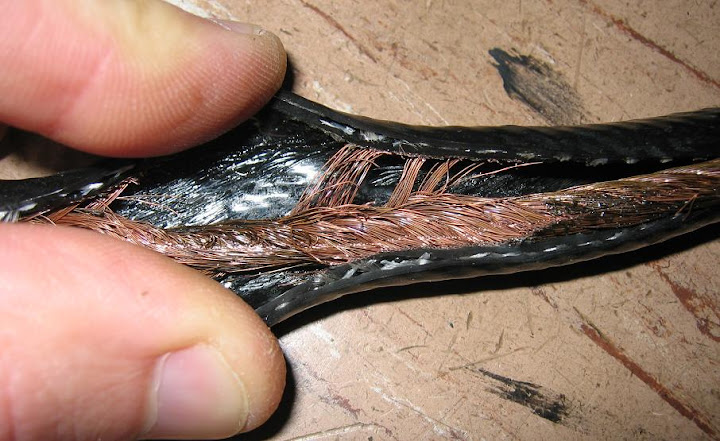
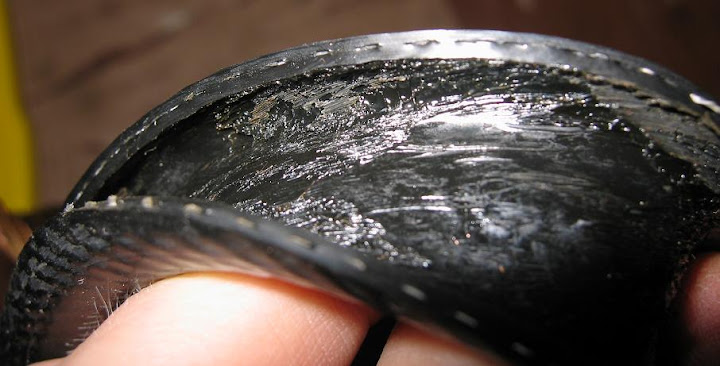
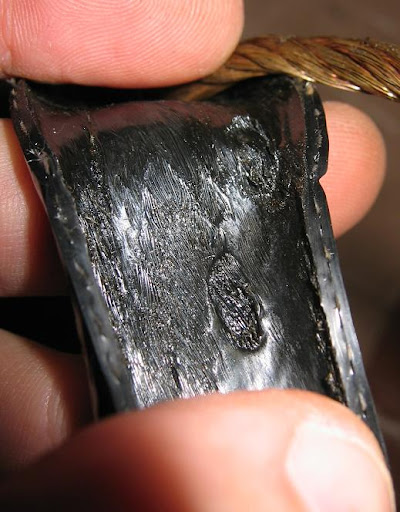
The autopsy confirmed my theory that the outer PVC shell of the cable assembly got melted inside, from the braided copper conductor not being thick enough to carry the current being used without getting too hot for the PVC jacket.
When the conductor got too hot it would melt the inside of the PVC jacket, which would offgass contaminated vapors into the argon gas. When this happened, it would contaminate both the workpiece as well as the hot tungsten itself.
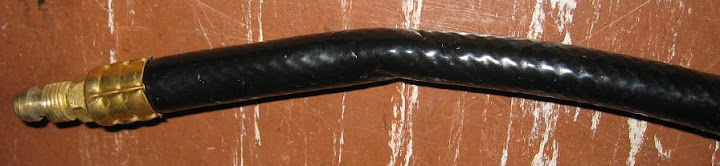
Externally, the only clues were deformation of the cable in spots, and also some inconsistent feeling "hard" or "thin" spots in the PVC cable jacket. Here you can see pretty clearly a deformed "kink" in the outside of the cable:
Inside the cut apart cable jacket, (ignore the cuts in the stranded wiring - I likely inflicted those when making the cut with my utility knife) you can see the melted inside wall in many spots. In some spots, I had to pull the conductor away from the cable wall with a good bit force, as the conductor had literally welded itself to the inside of the PVC cable jacket in places. If I kept on welding through this cable with high enough welding currents for long enough time, it is likely the hot conductor would have melted completely through the wall of the PVC cable jacket.
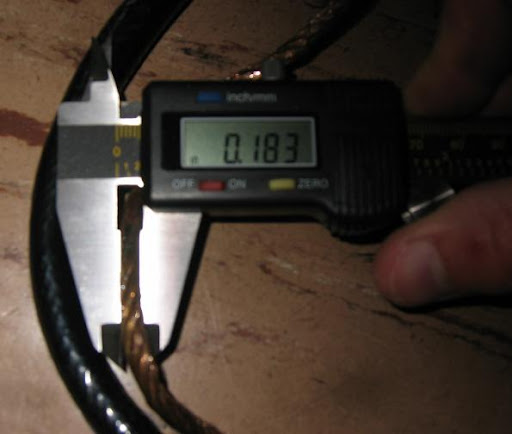
Based on the .183" OD of this multi-braided / stranded conductor, I'm guesstimating it to be about 6-8 AWG.
The "fix" here is to use a higher current capacity cable assembly. Such a cable assembly would have either a higher melting temperature jacket material (IE: silicone rubber material rather than PVC) and/or a thicker conductor (giving lower electrical resistance, so it would not heat up as much for a given amount of welding current.) Of course a watercooled cable assembly would also likely be effective in eliminating this problem, as the conductor would typically be immersed in liquid coolant, and the inert gas would travel to the torch through its own, separate hose.
Although I understand Everlast generally no longer supplies this particular type of "WP-17" torch/aircooled cable assembly with their newer welding machines, I feel it is important for others to be aware of this potential issue.
Last edited by jakeru; 12-16-2010 at 10:08 PM.
Everlast Sales and Support Team
WP 9's and 17's typically carry this type of system. It is very common across the industry. Most 9's top out at about 120 amps, and 17's at 150 with about 30% duty cycle.
Mark
performance@everlastwelders.com
www.everlastgenerators.com
www.everlastwelders.com
877-755-9353 x204
M-F 9am - 5pm EST
 Posting Permissions

 Reply With Quote